
Who are we ?
Established in July 2015, the Equipe d'Accueil 7431 serves as a computer science laboratory within the UFR des Sciences at the University of Versailles Saint-Quentin-en-Yvelines. Our laboratory benefits from the combined expertise of four research teams, including a partnership with Inria Saclay. We focus on a scientific initiative that integrates research on data and algorithms with significant applications in the realm of smart and sustainable cities. A notable aspect of our work is its strong interdisciplinary approach, particularly through collaborations with the Humanities and Social Sciences.
Director's word
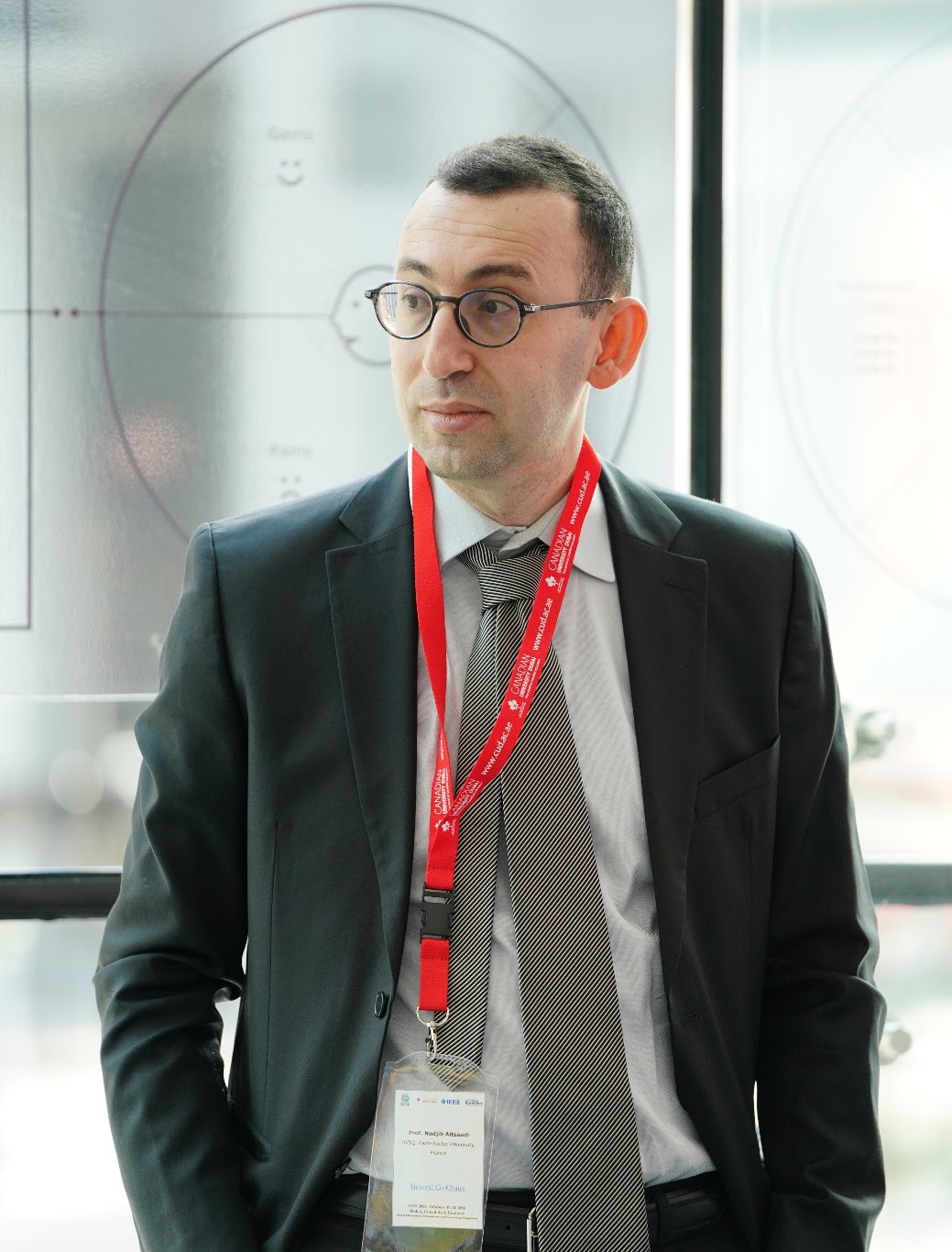
The DAVID Laboratory (Data and Algorithms for a Smart and Sustainable City) brings together, through its four research teams – ALMOST, DAC, NGN and PETRUS (a project conducted in collaboration with Inria Saclay) – recognised expertise in AI, Data Science, Networks, Cybersecurity, Theoretical Computer Science and Optimisation.
In keeping with the research identity of UVSQ, “Acting for Habitable Worlds”, we design digital solutions that contribute, directly or indirectly, to the development of smart and sustainable cities, as well as to the promotion and preservation of cultural heritage – a natural area of focus for a laboratory based in Versailles, on the doorstep of its world-renowned Château.
Our research spans a broad range of technology readiness levels (TRLs), from TRL 2 (theoretical research) to TRL 4/5, with validation on experimental platforms and a strong focus on technology transfer to industry. This is supported by close partnerships with industrial stakeholders in the Saint-Quentin-en-Yvelines area and across the Île-de-France region, including VEDECOM, Safran, Orange, Stellantis and Renault.
Finally, this ambition is underpinned by a strong commitment to interdisciplinarity, particularly through collaboration with the Humanities and Social Sciences, at the heart of the Paris-Saclay ecosystem. Our goal is to place people and society at the centre of the digital technologies of tomorrow.
Objective
The objective of the DAVID laboratory is to engage in research that effectively combines big data, data mining, modeling, and algorithms, while prioritizing data security and network confidentiality. This integration is crucial for developing innovative applications that advance the creation of smart and sustainable cities.
Stakes
Teams
DAC

ALMOST

NGN

PETRUS

